

Spelling — What Actually Works
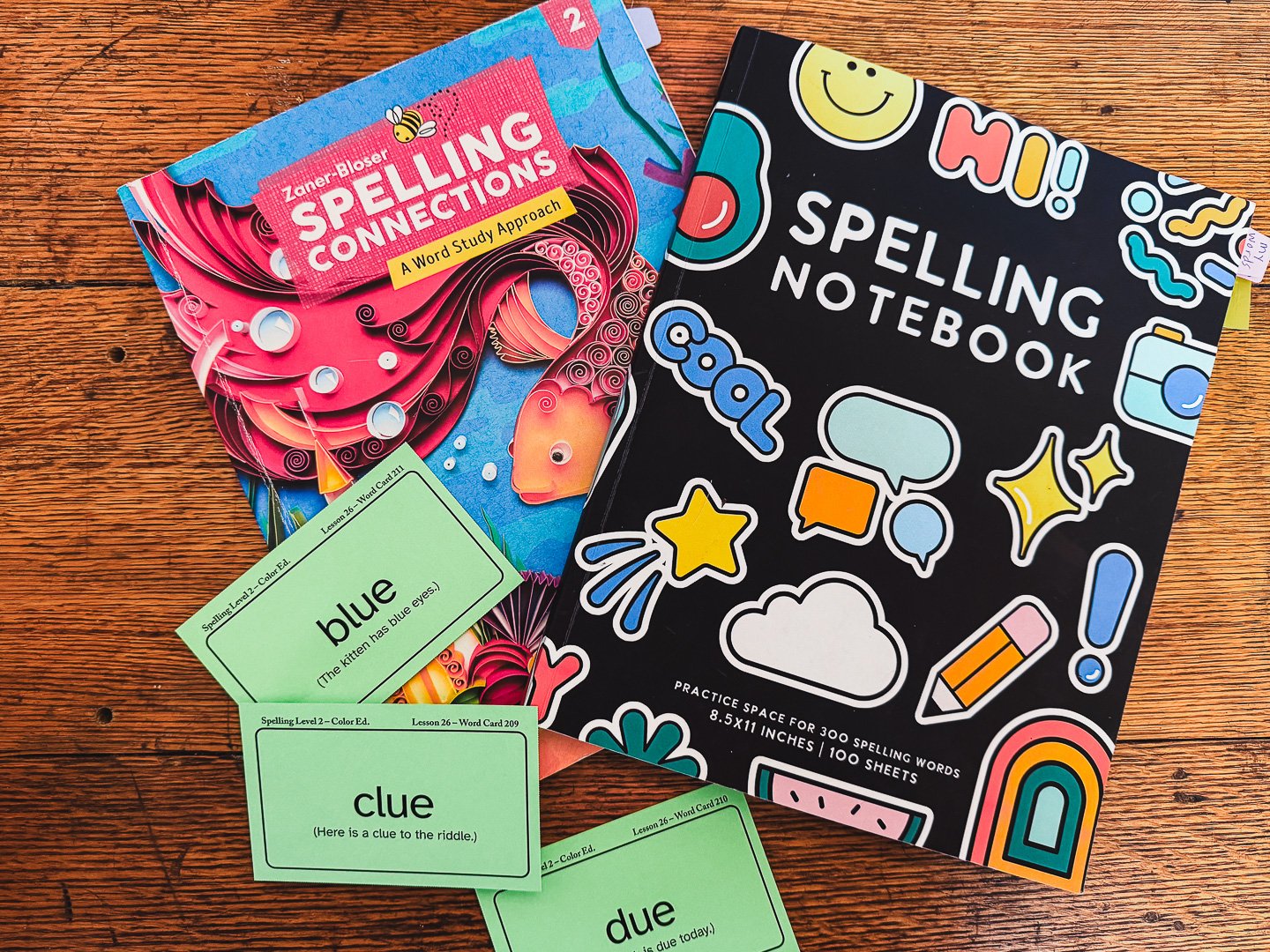
Spelling is hands down one of the trickiest long-term aspects of homeschooling. Sure, teaching a kid to read can feel like rocket science (it kind of is), and math can be….a lot, especially if you don’t see yourself as a “math person.”But spelling, learning to spell words correctly most of the time, is a marathon.
There is a wide range of “normal” or “grade-appropriate” when it comes to spelling. Kids move through stages of spelling growth throughout their elementary and even middle school years. While I wish I could just tell you, “Oh, your kid is 8 years old and in third grade, grab this curriculum,” — it just isn’t that simple.
Spelling is mostly logical
About 85% of English spelling is decodable and follows predictable patterns. (I know, shocking.) Another study showed that 96% of English words can be taught through explicit instruction in phonology, word patterns, structural analysis, and syllable types. When kids learn those patterns — letter-sound correspondences, syllable types, spelling rules — everything gets easier.
Memorization isn’t teaching
“Write it five times” doesn’t help a child understand anything. They’re just copying shapes. This also applies to spelling programs that use whole-language-based approaches, where you learn spelling through a nursery rhyme or poem (Yes, I’m looking at you, Spelling You See). And while we are at it, spelling resources that have you look at word “shapes” to spell are also ineffective (hello, A Reason for Spelling).
Kids spell better when they understand the language
Morphology, phonics, and word families give kids mental hooks to hang spelling on. Instead of memorizing a random string of letters, they’re learning how words are built — the sounds, the patterns, and the meaningful parts. English isn’t chaotic; it’s organized. When kids understand phoneme–grapheme relationships (which letters spell which sounds), how syllables work, and what a word’s base or affixes mean, spelling suddenly feels less like guessing and more like problem solving. Once kids learn that jumping = jump + ing or that signal/signature/design all share a meaningful base, they start recognizing patterns everywhere. That’s when spelling begins to stick.
So what DOES work?
Here are three easy changes that make a huge difference:
1. Teach patterns, not lists
Group words by meaningful connection: same phonics pattern, same suffix, same syllable type. A solid, evidence-based spelling program will do this for you! Recommended programs include:
Spellogrpahy (for older students who struggle with spelling)
2. Use phoneme-grapheme mapping
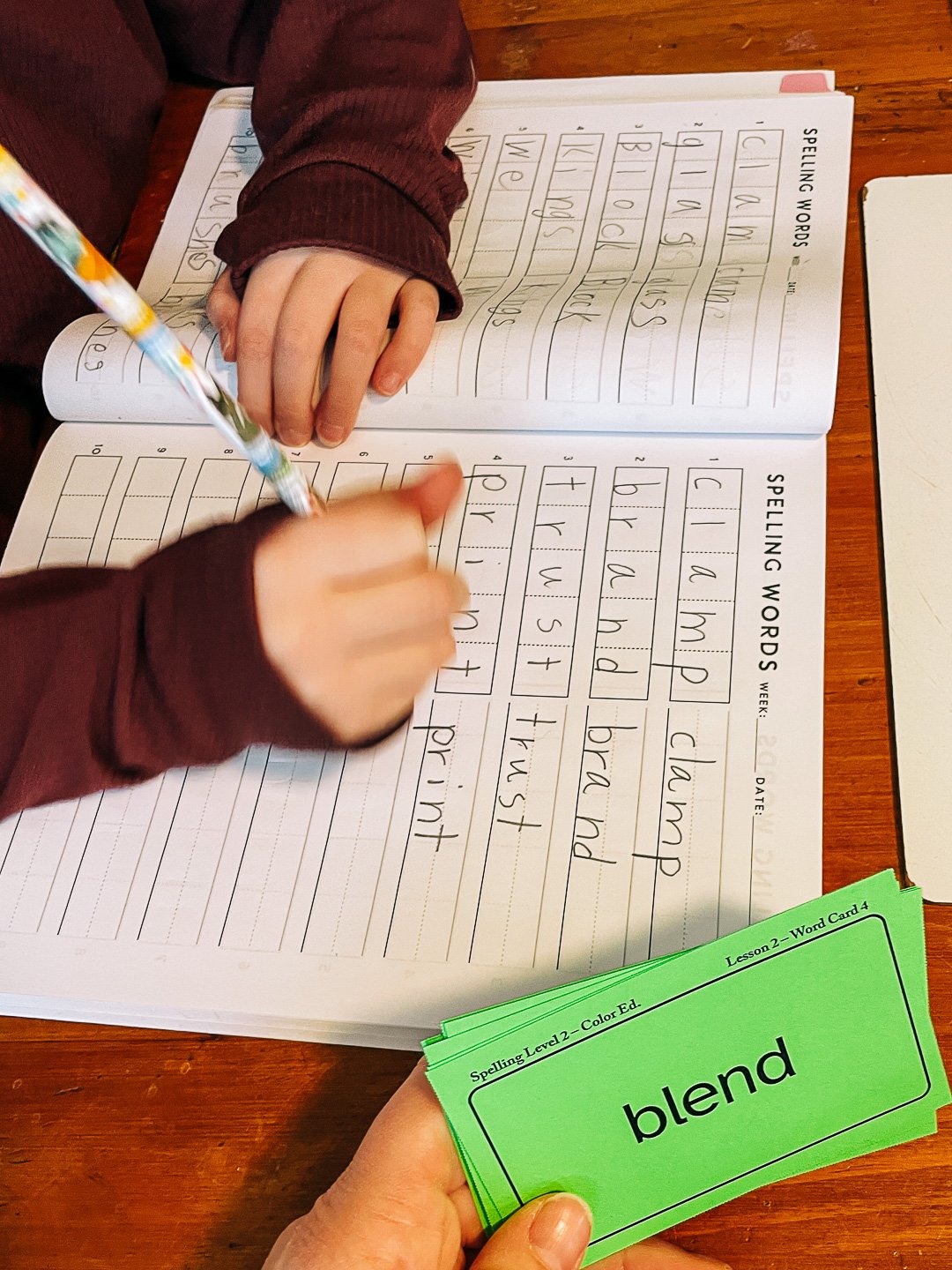
Orthographic mapping is the brain’s process for storing words permanently so kids can read and spell them automatically. Researchers like Ehri and Kilpatrick explain that this happens when children connect the sounds in a word with the letters that represent those sounds, and then anchor the word’s meaning on top of that. When those pieces click together, the brain creates a lasting “map” of the word that can be retrieved instantly.
To support that process, we use phoneme–grapheme mapping—a practical, hands-on activity in which kids break a word into its individual sounds and then match each sound to its corresponding letter or letter pattern. This routine builds the phonemic awareness and letter–sound knowledge the brain needs for orthographic mapping.
In short, phoneme-grapheme mapping is the instructional tool that helps make orthographic mapping, the mental process, possible.
Both are important, and both work beautifully at home when spelling is taught through patterns, sounds, and meaning instead of memorization.
3. Talk through tricky words
When your child gets stuck on a word, or asks you to spell something for them, you can walk them through a simple routine that builds confidence and reinforces the spelling skills you’ve already taught. Instead of giving them the word outright, guide them through the process so they learn to problem-solve it themselves.
Here’s what it sounds like:
1. “Okay, let’s break this down together. Say the whole word.”
Have them repeat the word clearly. Make sure they’re pronouncing it correctly — you can’t spell something you’re hearing inaccurately.
2. “What syllables do you hear?”
Help them tap, clap, or count the beats.
If they’re unsure, you can model:
“This word has two syllables: pic–nic.”
3. “Let’s spell one syllable at a time. Say your sounds as you write.”
They stretch out the sounds; you help them match each phoneme to its grapheme.
Slow, steady, no guessing.
4. Support with the rules and patterns you’ve taught
As they attempt each syllable, give quick reminders of the tools they already know:
Long vowel spellings: “This one uses the two-letter ee in the middle.”
Syllable types: “This syllable is closed, so the vowel will be short.”
Spelling generalizations: “After a short vowel, we usually use ck…”
Morphology: “Do you hear a base word in there?” or “We’re adding -ing, so drop the silent e first.”
This supports their thinking without taking over.
And When a Word Breaks the Rules…
Sometimes you go to apply a rule, and the English language looks back at you like, “LOL, not today.”
Take picnic, for example. You’ve taught your child that after a short vowel, we use ck — a beautiful, predictable rule that works… until suddenly it doesn’t.
So your kid spells picnick, and honestly? Fair. It makes sense based on what they’ve learned.
This is where you zoom out and show them that English is predictable — but only if you know the full pattern.
There are four ways to spell the /k/ sound at the end of a syllable or word:
CK – after a short vowel in a one-syllable word (back, neck, stick)
C – after a short vowel in multisyllabic words (and that short vowel is almost always i) (pic-nic, mag-ic, pub-lic)
K – after vowel teams or consonants (book, creek, milk, bark)
KE – after one long vowel in a VCe syllable (make, bike, poke)
Once kids see the bigger pattern, picnic no longer feels like chaos — it’s simply following a different (but still logical) spelling rule.
And here’s the real-life truth:
If you’re not sure why a word is spelled the way it is, look it up together. Kids love the detective work. It models curiosity, shows them that adults keep learning too, and reinforces that even “exceptions” usually trace back to something meaningful — often morphology or word origin.
If you feel overwhelmed about teaching spelling…
Check out my Spelling Instruction Guide and Checklist. I created this guide after years of working with homeschool parents in consulting sessions to take the pressure off both you and your child.
